Compressed air is used in many different industries. From refrigerator manufacturers to toy makers, companies around the world depend on
compressed air to produce products. It's so important that many consider it a utility as significant as electricity, water or natural gas.
Unfortunately, compressed air is also an expensive utility to produce. Many businesses spend tens of thousands of dollars generating
compressed air. And lots of this air goes unused. In fact, we found nearly half of all compressed air is wasted.
With decades of experience designing energy-efficient air compressors, we understand the true cost of compressed air. We also know the
potential savings are tremendous. In this article, you'll learn how to calculate the costs of compressed air- and how to cut them back.
The Cost of Compressed Air
Many
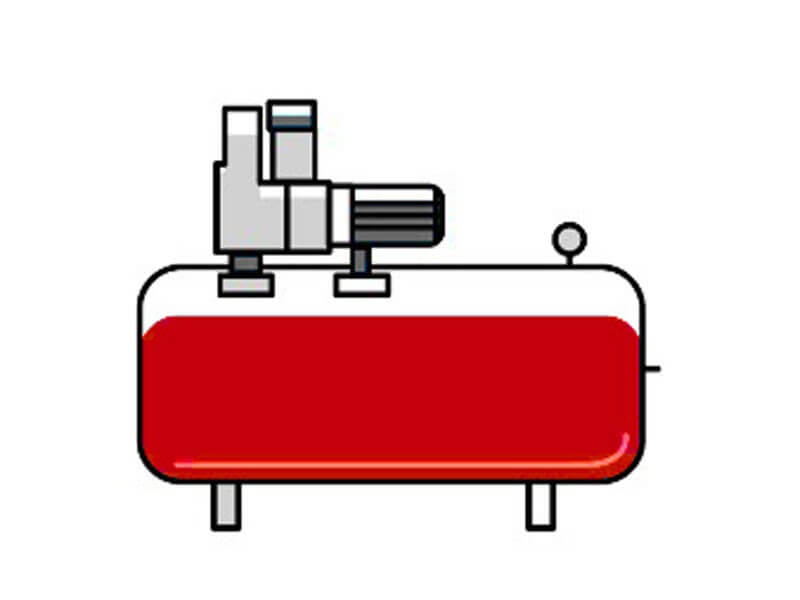
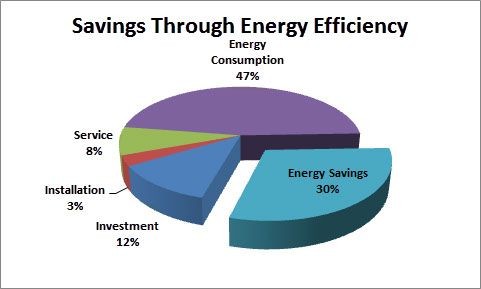
people wrongly assume the majority of the cost of compressed air is in the initial purchase of the machine. In reality, electricity to
operate the equipment over time is far more expensive. The equipment itself only accounts for just over 10 percent of the cost of
producing compressed air.
Equipment and Installation
Purchasing an air compressor is one of the biggest upfront costs. The price of an air compressor can vary depending on whether you're
looking for a rotary screw compressor or a reciprocating/piston compressor. How you dry and purify air can also affect the price of an air
compressor.
Along with equipment, consider the cost of installation. If your building needs retrofitting to accommodate the new compressor, factor this
in.
If you're purchasing a new air compressor, you should include any rebates into the price. Many Quincy Compressors are eligible for energy
efficiency rebates, which can bring down the cost of equipment.
Maintenance
Maintenance and repairs make up about 12 percent of an air compressor's lifetime cost, according to Energy Star data. These expenses include
labor and replacement materials. You may also have costs from project delays if repairs are needed at a critical time.
Regular inspections and maintenance can decrease repairs. Set up an inspection schedule, and stick to it. It's much easier to prevent damage
than it is to repair it. In addition, you'll be able to find and make repairs when the damage is minor. This can help you avoid more
expensive and time-consuming damage down the road.
Some parts of a compressor are more susceptible to damage than others. Common problems include air leaks and damaged cylinders, rings, and
bearings.
Components that are likely to develop leaks include:
Open condensate traps and shut-off valves
Fittings, couplings, tubes, and hoses
Pressure regulators
Joints on pipes, thread sealants, and disconnects
You can reduce the likelihood of damaged rings, cylinders, and bearings by regularly lubricating your equipment. Choose a suitable oil to
lubricate air lines, bearings, and screws. Keeping lubricant clean, applying the correct amount, and regularly lubricating components can
prevent many repairs.
Electricity
Believe it or not, operating a compressor is usually more expensive than purchasing one. Energy Star says on average, 76 percent of the
lifetime cost of an air compressor is electricity. In many businesses, compressed air is one of the most expensive utilities. Over 10 years
of operating, a typical industrial air compressor can accumulate up to $800,000 in electricity costs.
Many factors impact the cost of compressed air. How long you run your air compressor and the cost of electricity in your area both can drive
up cost. Technical specifications can also affect the cost of electricity. Energy-efficient air compressors cost less to operate than
conventional compressors.
Because the cost of compressed air can be significant, Quincy Compressors offers a free walkthrough to establish a baseline of efficiency,
otherwise known as EQ. The EQ rating can help you determine what the cost of operating a compressor will be.
How to Calculate Your Compressed Air Costs
Although
our EQ rating can help you understand the efficiency of your system, the true cost depends on your use. Determining this cost can help you
to reduce expenses. You can calculate the cost of operating an air compressor yourself in just four short steps. This example uses a small
home air compressor, running for just a few hours a day. Plants with industrial air compressors will have significantly higher costs.
However, large plants can still use this method to calculate their electricity costs.
1. Determine How Long the Compressor Is On
Most air compressors cycle on and off throughout the day. While the compressor is cycling on, it draws power. Use a clock or a stopwatch to
figure out how long the compressor runs each day. For many businesses, an air compressor's use differs by day. You can get a more accurate
estimate by averaging the compressor's use over a week. To do this, track your usage for seven days and divide the sum by seven.
2. Calculate How Much Power the Compressor Consumes
Your air compressor should have a wattage rating stamped on its nameplate. Multiply this wattage by the type of current needed to operate
it. Many smaller compressors operate on a standard household current, which is llO volts. Larger air compressors may need 220- volt current.
Example: 15 amp air compressor X llO volts= 1,650 watts per hour
3. Find the Total Kilowatt Hours Used
You will need to know how many kilowatt-hours the compressor uses to determine the energy cost. To find kilowatt-hours, multiply the watts
per hour by the total amount of time the compressor runs for. Then divide this number by 1,000.
Example: 1,650 watts per hour X 3 hours= 4,950 watt hours
4,950 / 1000 = 4.95 kilowatt hours
So a 15-amp air compressor that runs for three hours will use 4.95 kilowatt-hours of electricity.
4. Multiply the Kilowatt Hours Used by Cost of Electricity
Most utilities charge by the kilowatt-hour. This means that you will need to multiply the total kilowatt-hours used by the electricity rate
per kilowatt-hours. If your utility company uses tiered rates, you may want to use the average rate. This will give you a more accurate
estimate than selecting the lowest rate.
Example: 4.95 kilowatt-hours X 15 cents per kilowatt hour= 74 cents for 3 hours of use
Energy Saving Opportunities for Air Compressors
Luckily, there are many ways to reduce the costs of compressed air. Choosing the right air compressor can reduce your costs by approximately
45 percent. Today there are many energy-efficient compressors on the market.
Here are specific techniques you can use to save energy on compressed air.
1. Purchase an Energy-Efficient Air Compressor
Many modern air compressors offer better controls and storage than previous generations. If you're in the market for a new compressor, look
for energy-efficient flow control and storage systems.
Flow Control: Nearly half of compressed air is wasted. Flow control tools that can sense downstream pressure and react
to small changes can reduce compressed air waste.
Storage: Higher storage capacity means a compressor will need to run less often. If you use a lot of compressed air,
you may want to consider increasing the storage capacity. In an efficiency study of Mega Brand, we recommended they increase their storage
from 400 gallons to 1,560 gallons. That saved them $22,015 a year in compressed air costs.
2. Turn Off Your Air Compressor
Air compressors regularly cycle on and off to maintain the chosen pressure. Even minimal air leaks can cause your compressor to cycle on
regularly. Compressors that are on constantly can use a significant amount of electricity. Many businesses leave compressors on during
weekends and after hours. If you don't use your compressor during these times, turn it off. By turning it off when it's not in use, you can
reduce your electric bills by up to 20 percent.
3. Use Only the Required Air Pressure
Although it's tempting to raise the pressure to compensate for air leaks or clogged filters, you will spend more on electricity if you do
so. Each additional 10 sig requires approximately 5% more energy to produce. If you don't need the additional pressure, don't use it.
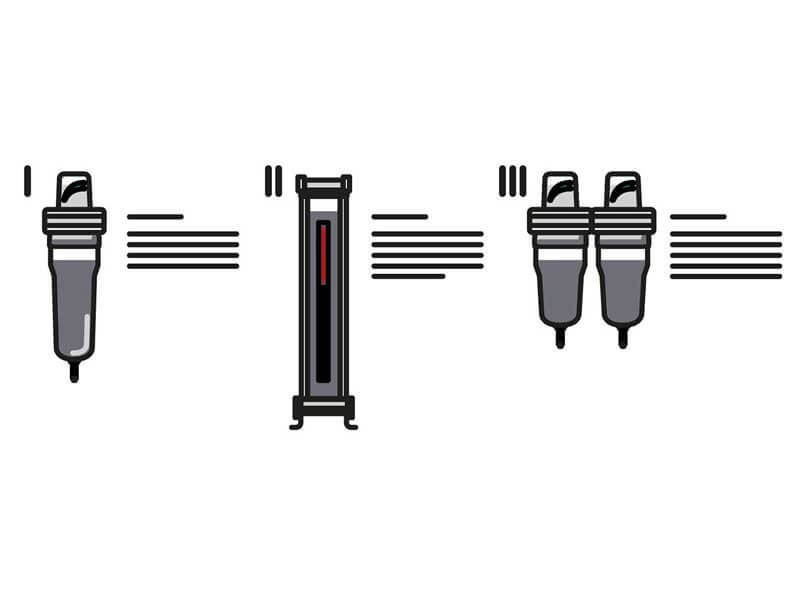
4. Change Filters Regularly
Changing your filter regularly can help reduce the electricity your air compressor uses. Clogged or dirty filters cause an air compressor's
motor to work harder to provide the appropriate psi, which results in a higher electric bill.
Regular filter cleaning can also reduce the cost of maintenance and the likelihood of air leaks. Filters are responsible for removing dust
and particles from the air. If these particles get into the compressor pipes, they can quickly corrode the pipes and cause air leaks.
Check compressor pipes regularly for any debris to make sure your filters are performing. If there is dust, dirt or sludge inside of the
compressed air pipes, your filters are not doing their job. Replacing these filters immediately will reduce the likelihood of expensive
repairs.
5. Regularly Survey for Air Leaks
Regularly surveying for leaks can reduce energy use This can equate to five to ten thousand dollars a day in big
companies. A successful leak audit requires three elements:
Knowledge: Ensure technicians understand the compressor's technical specifications and how to inspect the equipment.
Planning:Plan a regular time to inspect air compressors for leaks. If necessary, break up the inspection so it
doesn't interfere with regular work. Tag and take pictures of any leaks for repair.
Follow through: Survey equipment again to make sure all tagged leaks have been repaired.
6. Prioritize the Largest Air Leaks
If this is the first time you've conducted a leak audit, you may have found many air leaks. This can easily overburden an already
over-worked maintenance staff. Prioritize any air leaks you find by size. Larger holes mean your equipment will need more power to maintain
air pressure. These should be repaired first. Add a note that includes the priority level of any repairs to be made when you find new leaks.
7. Prevent Large Repairs
Regular maintenance reduces the likelihood of large, time-consuming repairs. It can also prevent smaller air leaks from forming. Check
pipes, seals, and bearings regularly for corrosion and particulates.
Make sure compressor components are operating within their optimum range. Periodically clean the water jackets and pipes that help to
maintain the temperature of the air compressor. If a compressor gets too hot, costly repairs and breakdowns are more likely. If the
compressor is air-cooled, check to make sure fins are not clogged with dirt.
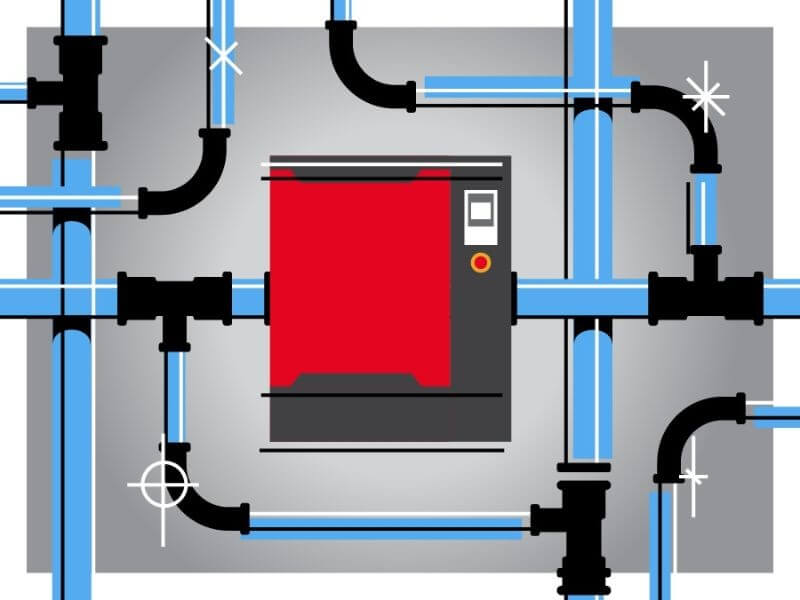
8. Review Piping Infrastructure
You can reduce the amount of energy your compressor needs by optimizing the pipes that deliver air. For instance, you can increase air
pressure by reducing the pipe size. This often means you can operate your compressor at a lower psi.
Choosing smaller pipes is one of the most effective ways to increase air pressure. Replacing a 3-inch diameter pipe with a 2-inch diameter
pipe will increase air pressure by approximately 50 percent. You may also want to consider whether you can shorten the distance between the
compressor and the air end.
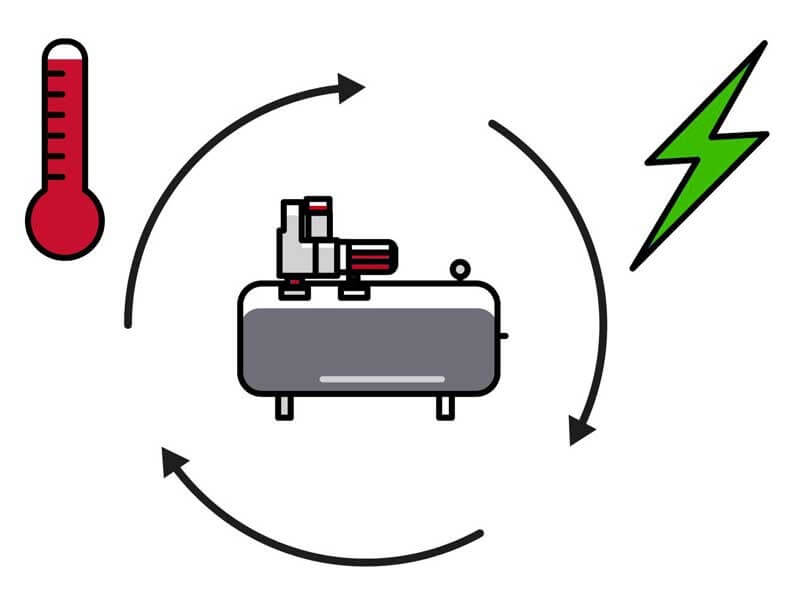
9. Reclaim Compressed Air for Heating
Some businesses choose to use the heat from air compressors for heating their building. By recirculating this air, you'll reduce the need
for additional heating.
To make this effective, you'll need to have ducting installed connecting the compressor to the area you will heat. Reclaiming compressor air
for heating is most effective if your compressor is air-cooled. Some businesses do reclaim water from water-cooled compressors for other
uses as well.
Who we are and how Ash Air can help your business!
Ash Air has been around in New Zealand since 1979, and we’ve grown into a nationwide company with international support and a
reputation for quality and reliability.We look after all things compressed air for your business!
Reciprocating, Screw, air compressors
Vacuum pumps
Nitrogen
An extensive line of air treatment components
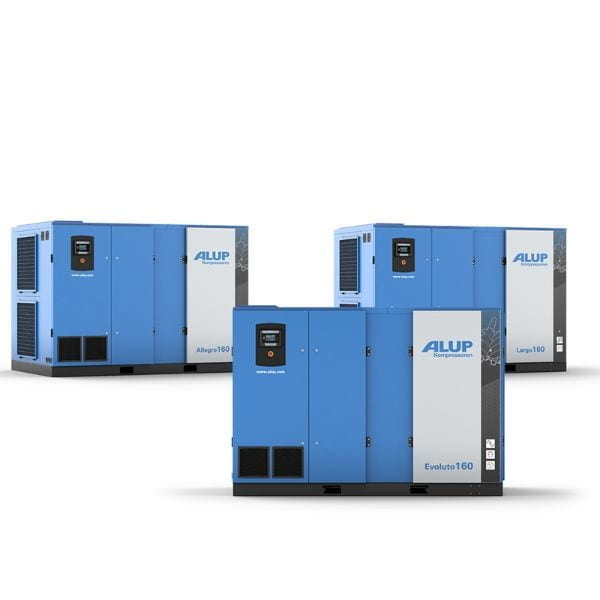
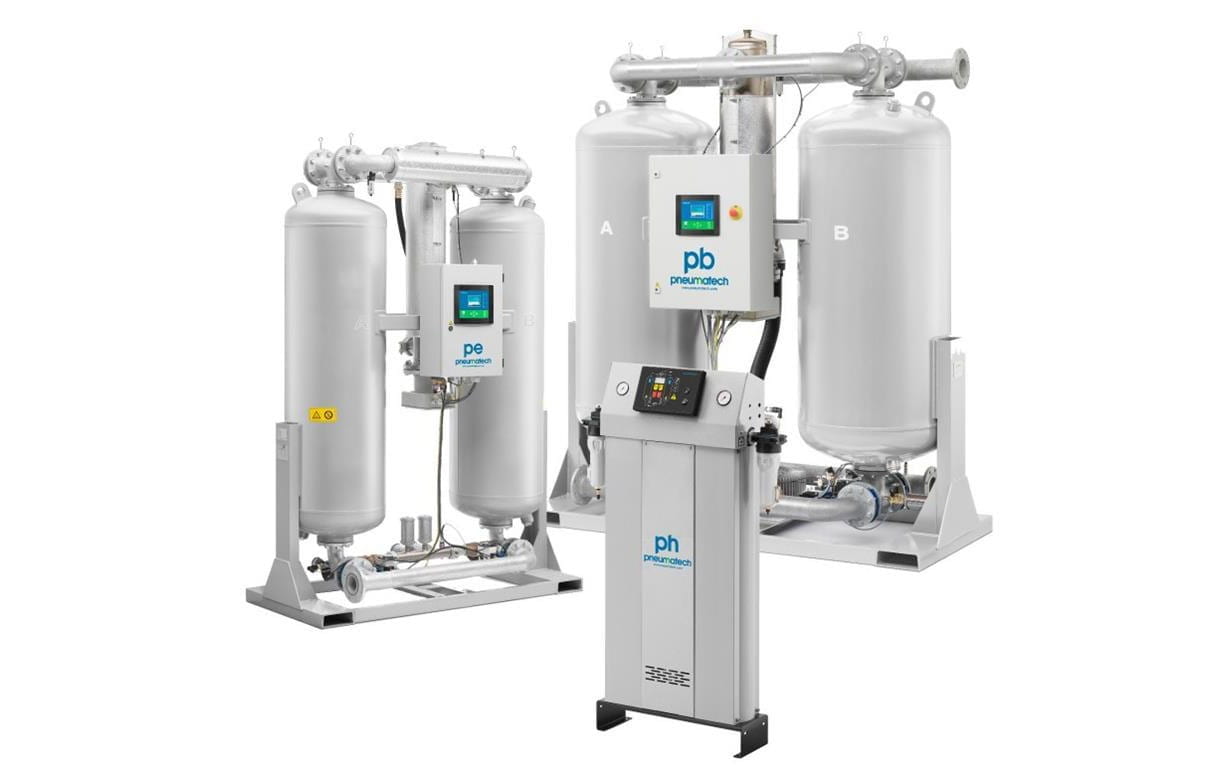
Ash Air's range of Chicago Pneumatic, Alup, Pneumatech, and Quincy compressors are used extensively around the world in industries
ranging from oil and gas to food, automotive and farming, and we bring you these world class compressors here in the land of the long white
cloud.Our technicians are compressed air equipment experts and are dedicated to addressing customer needs. Supported by a 13 locations
nationwide, Ash Air offers one of the widest selections of compressed air equipment and parts available today in New Zealand.
Reliability and Efficiency
With Ash Air compressors, you can count on reliability and high performance for even the most demanding applications. We focus our
efforts on the following:
Having a second compressor can come in handy and keep your business always up and running. The configuration of the second unit can be as a
backup machine, or as a redundant unit with your other compressor, or as a backup if your main compressor goes...
Read More…
One large benefit to a speed-controlled compressor is reducing power cost, minimizing power surges and delivering a more constant pressure
needed for the job at hand.
Read More…
Inside of your air compressor, you will find an internal oil-water separator. The internal separator separates the water from the oil that
stays inside the compressor.
Read More…
Air compressors are used in many different applications and provide essential compressed air to many businesses and individuals with
different air needs. No matter what your CFM, PSI and HP requirements are, the electronic controller on your air compressor is the
motherboard for keeping your unit running as efficiently as possible. It is your eyes into your machine.
Read More…
Air compressors are helpful for an enormous range of applications such as air filling, packaging, tools, HVAC control, and more! One
possible drawback is the amount of electricity they use; air compressors can be a huge drain on energy if used inefficiently. If you are
running them too long, allowing leaks to exist, or using the wrong type of compressor, you are wasting energy and money. This article will
go over some of the biggest power-wasters and how to
stop/prevent them!
Read More…
My use multiple air dryers in my facility, and they are causing the energy cost to be high. What can I do to make my air treatment system
more energy-efficient?
Read More…
Adsorption dryers can only be energy efficient if they contain premium desiccant material. The desiccant used in Pneumatech adsorption
dryers is carefully selected from a wide range of European and North-American suppliers, based on following key selection criteria:
Read More…
In the following guide, we want to try to answer some of the questions you may have been asking yourself in regards to screw air
compressors.
If you do not find the answer you are looking for, please get in touch with us.
Read More…
Air treatment helps prevent finish damage, scrapped materials, and tool/equipment replacement due to air moisture damage, like rust, when
using compressed air.
Read More…
Compressed air is a key utility supporting the food packaging and food processing industries. It is used in machines that fill products such
as cakes, pies, and liquid products, as well as during the packaging and transportation of snacks, vegetables, beer, soda and other items..
Compressed air must be moisture and contaminant-free to ensure the protection of the food products processed in each facility.
Read More…
Minimizing the risk of accidents in the workplace is a top priority in industry, and it is especially important when working with
pneumatic power tools. Ensuring that all safety precautions have been taken to protect the health and wellbeing of operators is vital. With
this in mind, here are seven simple steps to reduce the risk of accidents and improve operator safetyRead More…
With many different options on the market, it can be challenging to know what features to look out for when selecting an impact wrench. This
guide provides a brief overview of the technology and outlines some simple steps to help you get started.
Read More…
If you have never bought a rotary screw air compressor before; do the following. Add up the air consumption of all the equipment at your
shop. That will be the amount of air your desired compressor should provide.
Read More…
Regardless of the type of compressor you have, vibration issues can be troubling for any business. The root of the vibration can stem from
multiple sources, some internally and others externally. Understanding the cause of the vibration and how to resolve them will be critical
in keeping your compressor in proper working order.
Read More…
How well do you know the impact of the air line installation on your productivity? Test yourself by taking our quiz and answer all of the
questions to get your score at the end.
Read More…
Air compressors are essential to your business, but they can also become a safety hazard when used improperly. Reading your owner’s manual
and following all proper safety precautions before use is vital in keeping your compressor in great, working condition.
Read More…
Maintenance is key to continuing the performance of your air compressor. Continue to read about maximising the performance and longevity of
your compressor.
Read More…
Screw compressors are a type of compressor that, thanks to their reliability and long lifetime, belong to the most used types of
compressors. Learn more about them here!
Read More…
Did you know that cold weather can be of influence on the condition of your compressed air installation and compressed air? Read our cold
weather tips.
Read More…
Corrosion in the pipeline is due to insufficient condensation drainage that occurs during compression. The resulting condensate, together
with the compressed air, flow further into the compressed air line network and has a negative effect on the pipes. Find out more about how
you can prevent corrosion here.
Read More…
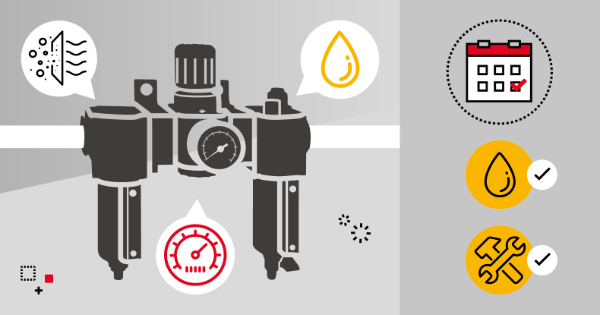
FRLs – Filters, Regulators and Lubricators – guarantee the efficiency and durability of pneumatic tools. Including an FRL in your air
system is vital to running an efficient air line set-up and key to achieving a good return on investment. Read
more here!
Read More…
Check out this blog and video included to help you know what you should be looking for when you're thinking about purchasing a Chicago
Pneumatic Rotary Screw Compressor for your shop or application. If you want to learn about what a screw compressor actually is, check out
this articleRead More…
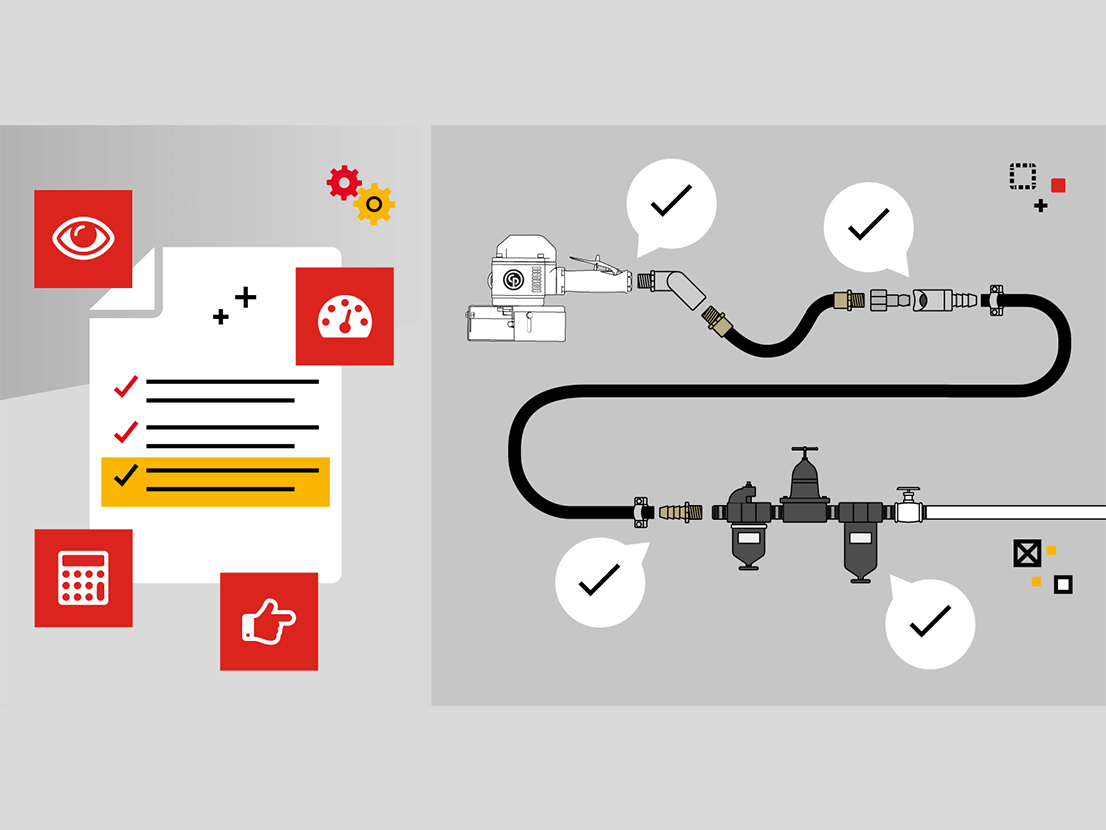
There are 3 simple steps to make sure your air line installation is providing the right pressure and that your accessories selection is
correct, so you can ultimately work productively. It does not take long and it is something you can easily do yourself using our
self-diagnostic checklist.
Read More…
Okay, okay, we're a bit excited. With the recent launch of our air tools in our
online shop.
Here's a 101 for you about what air tools you might need in your air compressor tool kit. Air tools are prevalent in automotive industries,
woodworking, construction, metalwork and more. Did you know that there's pretty much an air-powered version nearly any power tool on the
market? We want to share with you our 'Must have Air Tools'.
Read More…
When you are thinking about an air compressor, you might be have the image of the super popular piston or reciprocating compressor in your
mind. The compressor that you see in home workshops, automotive garages pumping up tyres and assisting in spray painting cars.
Read More…
As a follow on to our Why
You Should Not Use PVC Piping for Your Compressed Air System blog,
we share with you what piping you shouldbe using to get the most out of your compressed air system. Here at Ash Air we have the
perfect solution if you're wanting to match your great compressor with a fast, easy and reliable piping solution that supports the
operational excellence of your whole compressed air system.
Read More…
An air compressor is a big purchase for any business. It is visibly important to properly maintain the air compressor and filter elements to
protect that investment. Air intake filters are installed in an air compressor to remove any dust or debris the compress may suck in. Dust
will cause wear to the compressor element, valves, filters, compressor oil and any moving parts.
Read More…
So you have a vacuum pump installed and you rely on it for your business operations and performance? Here are some reasons why you should
consider overhauling your vacuum pump! s with all machinery and compressed air equipment, regular maintenance can help ensure optimised
safer performance of your vacuum pump. Learn more about benefits of restoring, rebuilding and repairing your vacuum pump.
Read More…
Air compressors are used every day, by many industries around the world. They are often considered the heart of a business, in that most
companies will rely on their performance and efficiency to run their operations, to get work done effectively and safely. In your day to
day, you've probably seen air compressors in use - whether at a build site powering construction equipment or in a mechanics workshop
inflating tyres.
Read More…
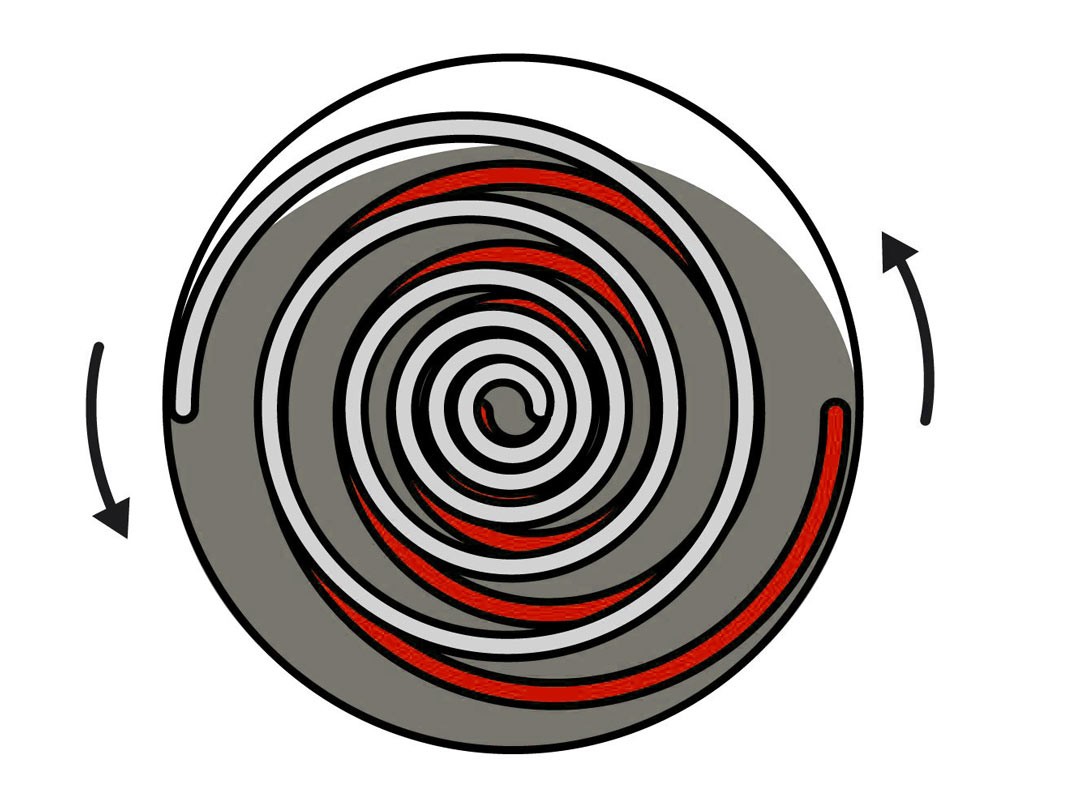
A scroll air compressor, or spiral compressor, compresses air by drawing it it, trapping it, reducing the volume and discharging it at the
outlet port. The scroll compressor that you see today, such as SpiralAIR, have
been the result of modernised advancements in manufacturing technology, even thought the concept of a scroll compressor has been around for
over 100 years.The scroll compressor is oil-free orbiting, or positive displacement compressor. The compressor has a stator spiral fixed in a
housing, and a motor driven eccentric orbiting spiral.
Read More…
Air compressors come in many types, rotary screw, piston, scroll, reciprocating, some are oil-free and other air compressors require oil
lubrication. Like many businesses, an efficient air compressor is at the heart of their operations. So, which type of compressor should you
choose? What makes a compressor, like a rotary screw, unique? Here are some clear cut benefits of equipping your business with a rotary
screw compressor.
Read More…
In the world of compressors, there are often significant and unutilized energy-saving possibilities including energy recovery, pressure
reduction, leakage reduction and optimization of operations through correct choice of a control and regulation system as well as the choice
of compressor size.We are going to take a look at some of the opportunities for minimizing the compressor’s operating costs.
Read More…
Many installations that produce compressed air offer significant and frequently unutilized energy
saving possibilities in
the form of waste energy recovery. In large industries, energy costs can amount to 80% of the total cost of compressed
air production.
However, a lot of this energy can be recovered, which in turn will save you a lot of money.
Read More…
Liquid water in compressed-air systems can lead to rusted equipment and unresponsive controls. Anyone who uses compressed air will, at some
point, find liquid water in the air distribution system. This can be anything from a nuisance to a serious problem, depending on the
application. If water might corrode equipment or introduce bacteria, removing it is critical.
Read More…
Liquid water in compressed-air systems can lead to rusted equipment and unresponsive controls. Anyone who uses compressed air will, at some
point, find liquid water in the air distribution system. This can be anything from a nuisance to a serious problem, depending on the
application. If water might corrode equipment or introduce bacteria, removing it is critical.
Read More…
Whenever most people think about a compressor, they probably have a piston compressor in mind. You might already know there are two basic
principles of air compression. One of those is the principle of displacement compression. There are a lot of compressor types that classify
as a displacement compressor. The piston compressor is one of them, oil-lubricated or oil-free.
Read More…
Once you have the size and type of
compressor figured out, one last question remains, should I go with an oil lubricated or oil-free air compressor. To not overcomplicate the
answer, your choice should be based on the application and process that the compressed air will be utilized in.
Read More…
Like all compressor types, rotary screw models do require periodic maintenance. Thanks to the simplicity of the internal components,
maintenance is relatively easy on most rotary air compressors. As long as you stick to a rotary screw compressor maintenance schedule, you
will likely be rewarded with many, many years of optimal productivity from your machine.
Read More…
Did you know, the biggest part of the air we breathe is nitrogen? Everyone needs oxygen to survive, however air is made up of 78% nitrogen,
only 21% oxygen and tiny amounts of other gases. Although, the human body does not use this nitrogen, it is very helpful in various
industrial applications. There is an unlimited source of nitrogen readily available, allowing you to achieve needed purity at a fraction of
your current annual nitrogen cost.
Read More…
If you notice that your compressor is getting hot and bothered, there may be heating issues affecting your air compressors performance. Did
you know that an overheating compressor is top of the pops for being the most common cause of compressor failure.
Read More…
A rotary-screw compressor is an air compressor that uses a rotary-type positive-displacement mechanism, typically used replace piston
compressors where large volumes of high-pressure air are needed, either for large industrial applications or to operate high-power air
tools.
Read More…
Have a look around and what do you see? What are you thinking about? Your next holiday to Queenstown maybe? You might go snowboarding with
the kids or have some alone time at the Day Spa. Whatever holiday you choose, compressed air is involved in some way, without you even
realising it!
Read More…
There are crucial reasons why you should service and maintain your compressor regularly, with the most common issues being piston failure
caused by wear of components, increased friction, corrosion, reduced cooling, overheating bearings and components, clogging of air filters.
Read More…
Our passion for energy efficiency and cost saving derives from the concern for our children’s future. Analysing the efficiency of your
system is a brilliant way to start saving.
Read More…
Compressed air is all around us, from the air in a balloon to pumping up tires on your bicycle. In this article we will explain what
compressed air is and how it is created. Whether you know it or not, compressed air is involved in every aspect of our lives, from the
balloons at your birthday party to the air in the tires of our cars and bicycles. It was probably even used when making the phone, tablet or
computer you’re viewing this on.
Read More…
One of the biggest challenges is to correctly size your new air compressor. Similarly to everything else, new compressors available on the
market are more efficient and employ better technology, therefore you have to understand the application and usage to size the machine
correctly. Choosing the wrong air compressor for your facility can lead to problems with production and or increased costs due to wasted
energy.
Read More…
Once you have the size of the air compressor figured out, the
next thing to do is to decide on the type of compresor you will need for your application - piston, rotary screw compressor etc. Let us take
a look at two of the most popular options available. When choosing the right type of compressor, you should ask yourself the following
questions:
Read More…
Which vacuum pump do I need? - this is one of the most frequent questions we receive and this is understandable, because there are number
of technologies which can provide the same vacuum level and pumping speed. Here is quick advice on how to choose the best vacuum pump for
your needs.
Read More…
You may be asking, why does my air compressor start, then stop? Allow us to take the guessing out of it. We understand your pain. We know
that a compressor problem can quickly result in hours (if not days) of production downtime and loss of revenue. When your compressor
continuously shuts off from on, we refer that as a short cycle. There are a few reasons that a short cycle may be happening with your
compressor.
Read More…
Air compressor leaks are very common in all applications, but can be very costly and difficult to find. On average, 20-30% of the compressed
air used in a manufacturing plant is wasted as leaked air. Finding and fixing these leaks can save your business thousands of wasted dollars
a year.
Read More…

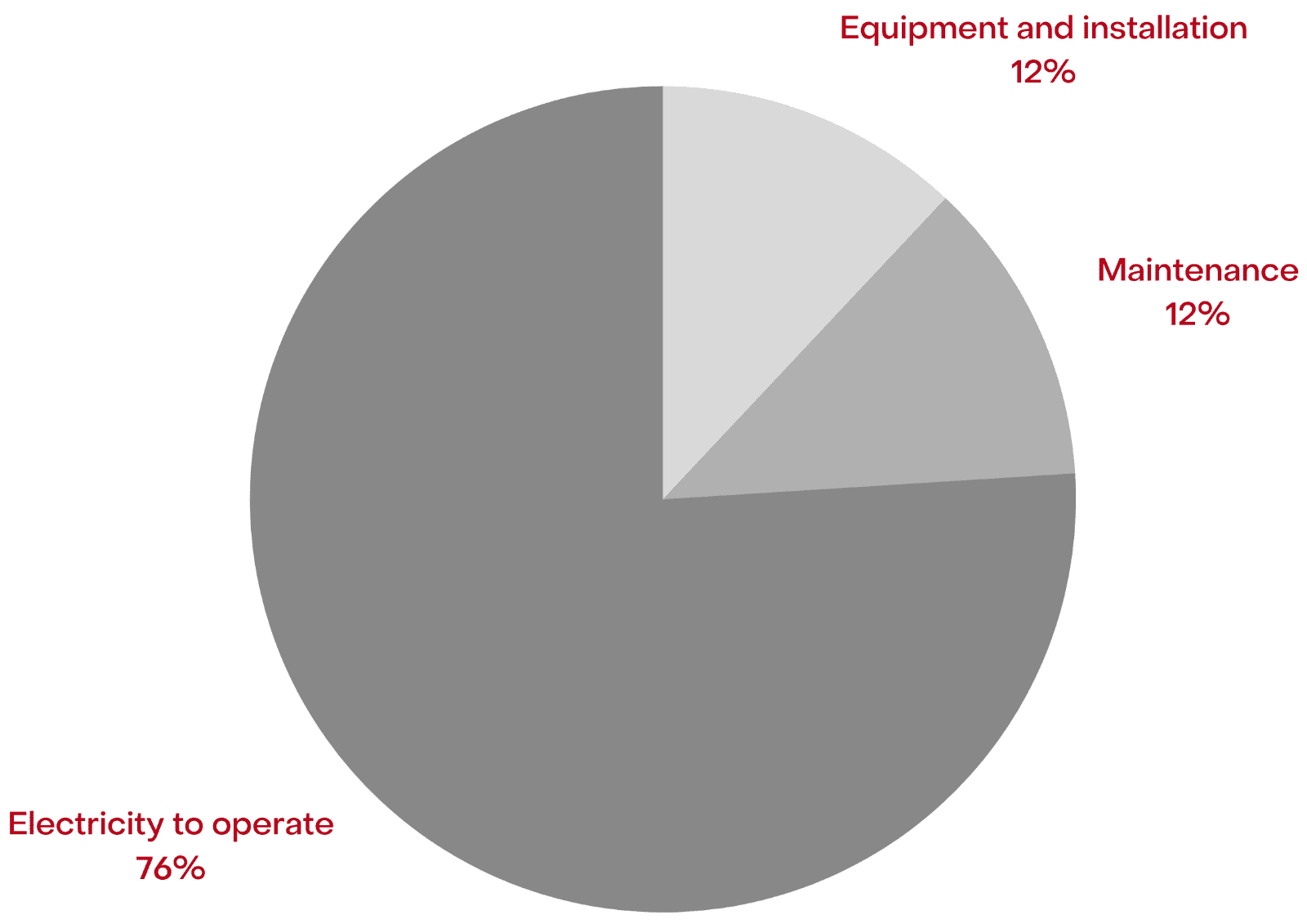 Many
people wrongly assume the majority of the cost of compressed air is in the initial purchase of the machine. In reality, electricity to
operate the equipment over time is far more expensive. The equipment itself only accounts for just over 10 percent of the cost of
producing compressed air.
Many
people wrongly assume the majority of the cost of compressed air is in the initial purchase of the machine. In reality, electricity to
operate the equipment over time is far more expensive. The equipment itself only accounts for just over 10 percent of the cost of
producing compressed air.
.png) Although
our EQ rating can help you understand the efficiency of your system, the true cost depends on your use. Determining this cost can help you
to reduce expenses. You can calculate the cost of operating an air compressor yourself in just four short steps. This example uses a small
home air compressor, running for just a few hours a day. Plants with industrial air compressors will have significantly higher costs.
However, large plants can still use this method to calculate their electricity costs.
Although
our EQ rating can help you understand the efficiency of your system, the true cost depends on your use. Determining this cost can help you
to reduce expenses. You can calculate the cost of operating an air compressor yourself in just four short steps. This example uses a small
home air compressor, running for just a few hours a day. Plants with industrial air compressors will have significantly higher costs.
However, large plants can still use this method to calculate their electricity costs.



.png)