Did
you read about screw air compressors and now want to know where screw compressors are
applied? You came to the right place!
In the following guide, we discuss the application areas of a screw air compressor and where they are suitable.
Keep reading to also find out which of the screw compressors currently dominate the industry as they are the most
common amongst compressed air productions.
The screw compressor is suitable for both intermittent and continuous operation. Operating budget is optimal during continuous operation are
high load levels (up to 100%). With modern technology; e.g. speed control, the screw compressor's energy consumption for low or varying air
requirements can be reduced significantly compared to previous methods.
Liquid-injected (oil-injected) screw compressors in one-stage models currently dominate the industry, where operational pressures up to 1300
kPa and a capacity of up to approximately 30 m³/min are required.
We added the rotary screw technology to our line in response to the increasing use of compressed air for industrial environments. Efficient
and reliable performance was needed for some of the most demanding applications like energy exploration, food and beverage processing and
manufacturing. All air compressors perform the same basic function — they increase the pressure and reduce the volume of a
Here is a list that shows the wide range of uses for industrial-sized air compressors for almost any application.
1. AGRICULTURE/FARMING
For productive and profitable farming operations, compressed air provides long-lasting performance and a low cost of ownership.
Compressed air is used for:
Moving feed and grain to and from silos with conveyors
Glasshouse ventilation systems
Spraying crops
Powering dairy machines
Operating pneumatic material handling equipment
2. MANUFACTURING
Whether in refineries, plastics, assembly plants or metal fabrication, an air compression system is the central power source that keeps a
business in production. Powerful air compressors aid in manufacturing by:
Operating air tools on production lines
Cutting and welding equipment
Ejecting pieces from production molds
Monitoring production
Adjusting roller and feed machinery
Blowing a molded gas tank or plastic bottle
Efficiently performing basic tasks such as driving screws and turning nuts
Increasing production efficiency with air cylinders that power positioners, clamps, air chucks, and air knives
Finishing and packaging with pneumatic devices used for liquid padding, carton stapling, appliance sanding, dry powder transporting and
fluidizing
Sandblasting and finishing metal
Operating automated machinery
3. DRY CLEANING
Reliable air supply and a dependable system are required for the dry cleaning industry, which demands quality cleaning of
garments. Compressed air is used for:
Delivering chemical applications through cleaning guns
Operating laundry presses and steam cleaners
4. PHARMACEUTICAL
Remaining clean, dry and oil-free are top priorities for this highly regulated industry that needs precision equipment and high-performance
systems. A pharmaceutical air compressor setup works by:
Moving product on conveyor systems
Spraying coatings on pharmaceuticals
Maintaining pressure in mixing and holding tanks
Bottling and packaging products
5. ENERGY EXPLORATION
The remote nature of energy exploration requires the most dependable power to minimize repair and maintenance costs. An air
compressor will be:
Powering pneumatic tools and equipment in onshore and offshore operations
Compensating for motion caused by turbulent seas
Inserting and withdrawing reactor rods
Controlling valves in steam and coolant circuits remotely
Powering ventilation systems for boiler houses
6. FOOD AND BEVERAGE
All types of food and beverage manufacturing facilities use air compressor systems for various production tasks. They need
contaminate-free and consistent compressed air to run their constant operations. Compressed air is used for:
Packing and palleting products
Closing and checking devices
Filling equipment for drinks
Cooling and freezing products
Having power in the form of compressed air provides end-users with much more control over usage and air quality since it is generated
on-site. Around 90 percent of all manufacturing companies use compressed air in their production and plant processes in some form.
Unique Industrial Air Compressor Applications
Due to the long lists above of the many uses of an air compressor, you can already guess that this utility has a number of features
that make it the ideal power source for a vast range of uses.
Here are a few features of compressed air, each combined with an example of a situation that benefits from the feature:
Pressurized air does not interfere with electrical monitoring equipment — preferred in hospital operating theaters.
Compressed air can be stored in pressurized tanks of various sizes — leading to smaller varieties that provide breathing air
for scuba divers.
The equipment operated by pressurized air can be used in extreme temperatures — allowing air tools to be employed for
maintaining furnaces and industrial freezers.
Compressed air can be easily stored in application-specific tanks to be used in remote areas — ideal for powering snow-making
machines.
The Compressed Air Advantage: Reliable, Versatile and Safe Energy
Seen as the plant workhorse in business, the convenient helper at home and the efficient aid in, compressed air is a power source that
is widely used even though many people fail to realize how common it is.
Individuals, businesses and industries benefit from the ability to produce on-site power through air compression. As we mentioned
earlier, compressed air can be more expensive to produce, but since it cuts production costs in many other ways, it’s a
necessary element of almost every manufacturing and industrial environment.
What are these benefits that make a seemingly “expensive” utility the top choice for many environments?
You may remember the benefits of using air tools in the section above. They are lighter and much more durable, especially when used
constantly and in rough and dirty environments. Their use results in increased productivity and efficiency from quicker tool speed
and user strain that is greatly decreased or eliminated altogether.
The tough applications that are typical in steel mills and foundries are not welcoming for electric-powered tools. The high temperatures and
dirty surroundings are the perfect environments for frequent electrical overloading and equipment malfunctioning. Air tools
require periodic maintenance, but they require much less than their electric counterparts and are nearly indestructible.
Another favorable feature of compressed air is that it can be stored to support fluctuations in use. Not having to worry about spikes in
electricity consumption that can trip fuses and sabotage equipment is a top priority of any production line. An air compressor can be
installed to meet the demands of any constant and fluctuating use. With the right system, you get the necessary pressure and storage
tank to provide reliable and consistent energy.
Who we are and how Ash Air can help your business!
Ash Air has been around in New Zealand since 1979, and we’ve grown into a nationwide company with international support and a
reputation for quality and reliability.We look after all things compressed air for your business!
Reciprocating, Screw, air compressors
Vacuum pumps
Nitrogen
An extensive line of air treatment components
Ash Air's range of Chicago Pneumatic, Alup, Pneumatech, and Quincy compressors are used extensively around the world in industries
ranging from oil and gas to food, automotive and farming, and we bring you these world class compressors here in the land of the long white
cloud.Our technicians are compressed air equipment experts and are dedicated to addressing customer needs. Supported by a 13 locations
nationwide, Ash Air offers one of the widest selections of compressed air equipment and parts available today in New Zealand.
Reliability and Efficiency
With Ash Air compressors, you can count on reliability and high performance for even the most demanding applications. We focus our
efforts on the following:
Air compressors come in many types, rotary screw, piston, scroll, reciprocating, some are oil-free and other air compressors require oil
lubrication. Like many businesses, an efficient air compressor is at the heart of their operations. So, which type of compressor should you
choose? What makes a compressor, like a rotary screw, unique? Here are some clear cut benefits of equipping your business with a rotary
screw compressor.
Read More…
In the world of compressors, there are often significant and unutilized energy-saving possibilities including energy recovery, pressure
reduction, leakage reduction and optimization of operations through correct choice of a control and regulation system as well as the choice
of compressor size.We are going to take a look at some of the opportunities for minimizing the compressor’s operating costs.
Read More…
Many installations that produce compressed air offer significant and frequently unutilized energy
saving possibilities in
the form of waste energy recovery. In large industries, energy costs can amount to 80% of the total cost of compressed
air production.
However, a lot of this energy can be recovered, which in turn will save you a lot of money.
Read More…
Liquid water in compressed-air systems can lead to rusted equipment and unresponsive controls. Anyone who uses compressed air will, at some
point, find liquid water in the air distribution system. This can be anything from a nuisance to a serious problem, depending on the
application. If water might corrode equipment or introduce bacteria, removing it is critical.
Read More…
Liquid water in compressed-air systems can lead to rusted equipment and unresponsive controls. Anyone who uses compressed air will, at some
point, find liquid water in the air distribution system. This can be anything from a nuisance to a serious problem, depending on the
application. If water might corrode equipment or introduce bacteria, removing it is critical.
Read More…
Whenever most people think about a compressor, they probably have a piston compressor in mind. You might already know there are two basic
principles of air compression. One of those is the principle of displacement compression. There are a lot of compressor types that classify
as a displacement compressor. The piston compressor is one of them, oil-lubricated or oil-free.
Read More…
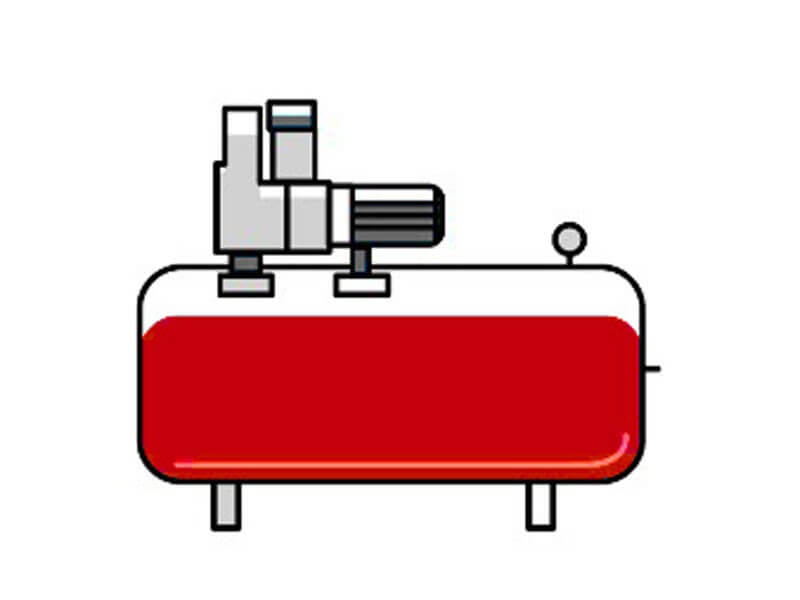
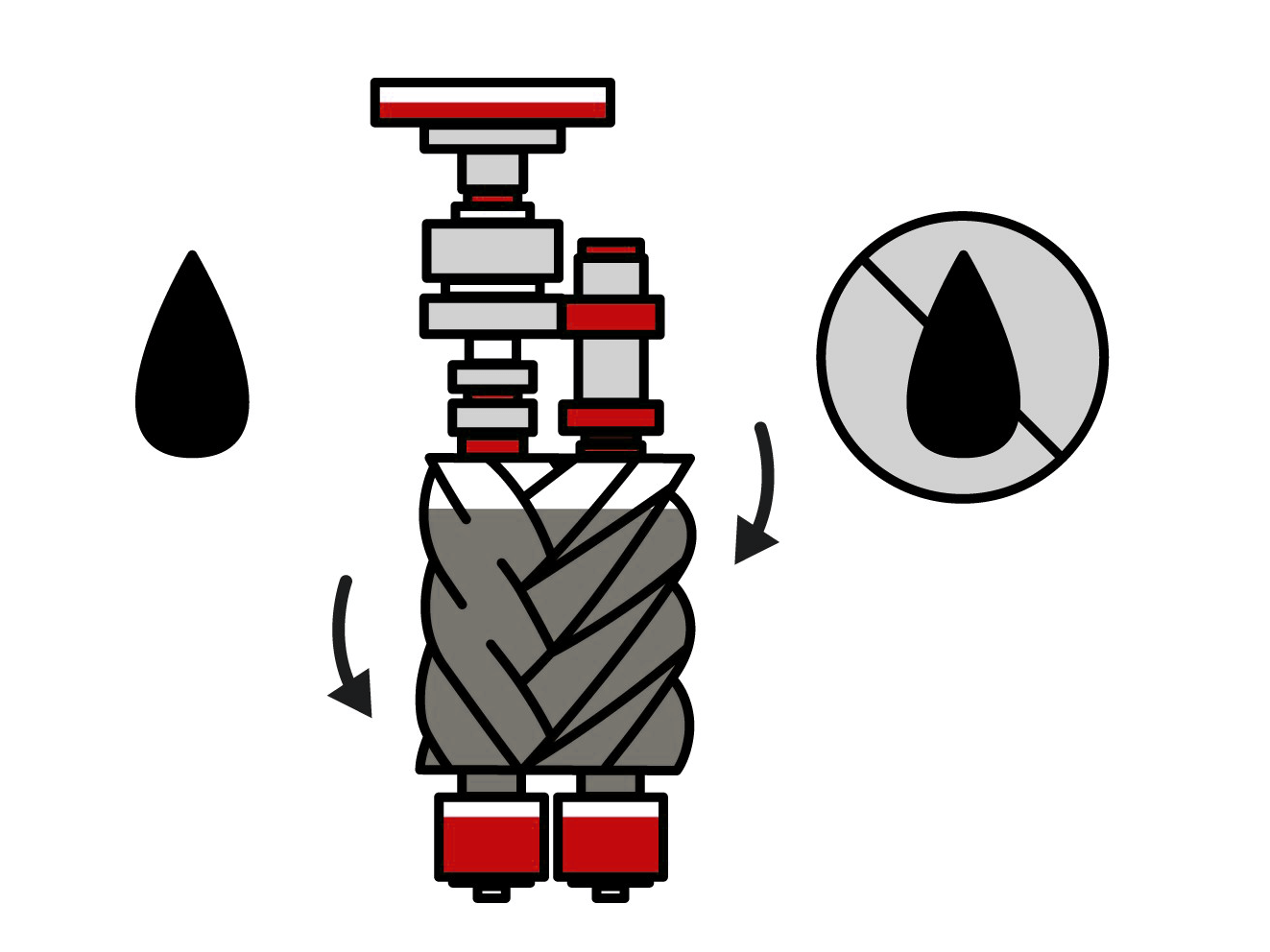
Once you have the size and type of
compressor figured out, one last question remains, should I go with an oil lubricated or oil-free air compressor. To not overcomplicate the
answer, your choice should be based on the application and process that the compressed air will be utilized in.
Read More…
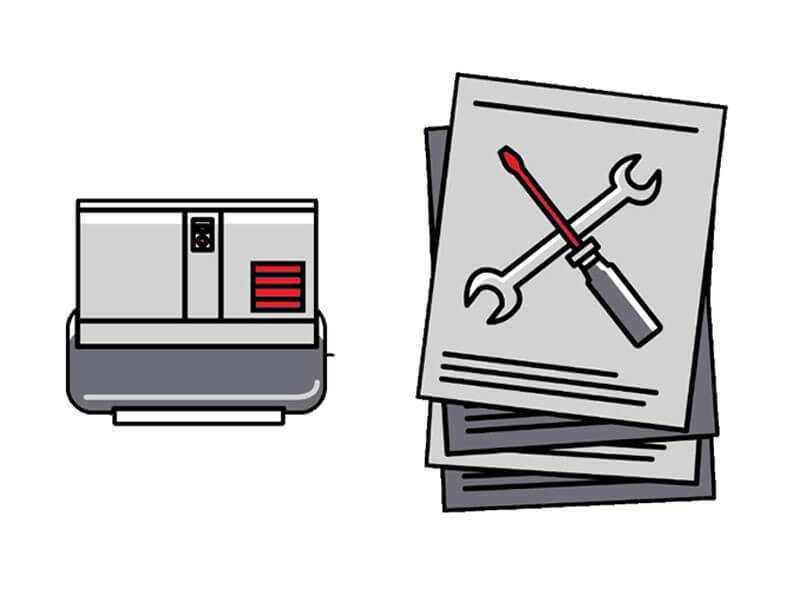
Like all compressor types, rotary screw models do require periodic maintenance. Thanks to the simplicity of the internal components,
maintenance is relatively easy on most rotary air compressors. As long as you stick to a rotary screw compressor maintenance schedule, you
will likely be rewarded with many, many years of optimal productivity from your machine.
Read More…
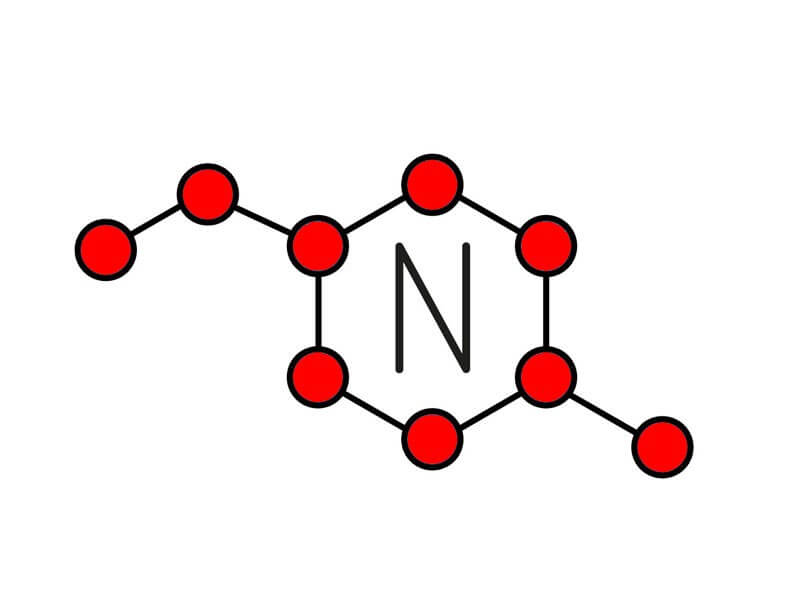
Did you know, the biggest part of the air we breathe is nitrogen? Everyone needs oxygen to survive, however air is made up of 78% nitrogen,
only 21% oxygen and tiny amounts of other gases. Although, the human body does not use this nitrogen, it is very helpful in various
industrial applications. There is an unlimited source of nitrogen readily available, allowing you to achieve needed purity at a fraction of
your current annual nitrogen cost.
Read More…
If you notice that your compressor is getting hot and bothered, there may be heating issues affecting your air compressors performance. Did
you know that an overheating compressor is top of the pops for being the most common cause of compressor failure.
Read More…
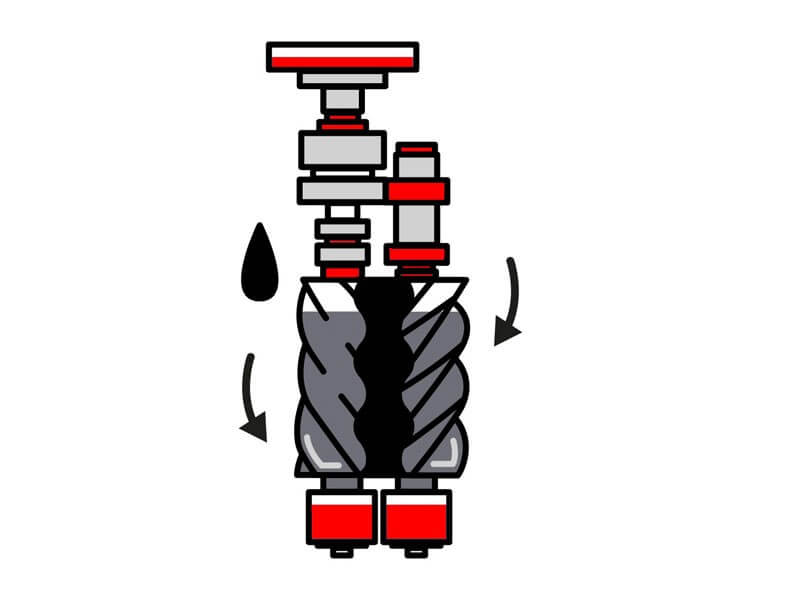
A rotary-screw compressor is an air compressor that uses a rotary-type positive-displacement mechanism, typically used replace piston
compressors where large volumes of high-pressure air are needed, either for large industrial applications or to operate high-power air
tools.
Read More…
Have a look around and what do you see? What are you thinking about? Your next holiday to Queenstown maybe? You might go snowboarding with
the kids or have some alone time at the Day Spa. Whatever holiday you choose, compressed air is involved in some way, without you even
realising it!
Read More…
There are crucial reasons why you should service and maintain your compressor regularly, with the most common issues being piston failure
caused by wear of components, increased friction, corrosion, reduced cooling, overheating bearings and components, clogging of air filters.
Read More…
Our passion for energy efficiency and cost saving derives from the concern for our children’s future. Analysing the efficiency of your
system is a brilliant way to start saving.
Read More…
Compressed air is all around us, from the air in a balloon to pumping up tires on your bicycle. In this article we will explain what
compressed air is and how it is created. Whether you know it or not, compressed air is involved in every aspect of our lives, from the
balloons at your birthday party to the air in the tires of our cars and bicycles. It was probably even used when making the phone, tablet or
computer you’re viewing this on.
Read More…
One of the biggest challenges is to correctly size your new air compressor. Similarly to everything else, new compressors available on the
market are more efficient and employ better technology, therefore you have to understand the application and usage to size the machine
correctly. Choosing the wrong air compressor for your facility can lead to problems with production and or increased costs due to wasted
energy.
Read More…
Once you have the size of the air compressor figured out, the
next thing to do is to decide on the type of compresor you will need for your application - piston, rotary screw compressor etc. Let us take
a look at two of the most popular options available. When choosing the right type of compressor, you should ask yourself the following
questions:
Read More…
Which vacuum pump do I need? - this is one of the most frequent questions we receive and this is understandable, because there are number
of technologies which can provide the same vacuum level and pumping speed. Here is quick advice on how to choose the best vacuum pump for
your needs.
Read More…
You may be asking, why does my air compressor start, then stop? Allow us to take the guessing out of it. We understand your pain. We know
that a compressor problem can quickly result in hours (if not days) of production downtime and loss of revenue. When your compressor
continuously shuts off from on, we refer that as a short cycle. There are a few reasons that a short cycle may be happening with your
compressor.
Read More…
Air compressor leaks are very common in all applications, but can be very costly and difficult to find. On average, 20-30% of the compressed
air used in a manufacturing plant is wasted as leaked air. Finding and fixing these leaks can save your business thousands of wasted dollars
a year.
Read More…
When installing a compressed air system into a business, people often look to PVC piping as an option to build a piping system because it is
cheap, versatile and easy to install. However, using PVC pipe in any compressed air application is extremely dangerous and NOT recommended
by multiple associations and manufacturers.
Read More…
Changing the oil and oil filters on your compressor is one of the most common routine maintenance tasks to perform to keep your compressor
running efficiently. After you remove your old oil and oil filter, you may find yourself wondering, “Where do I dispose of these?”, or “Can I
just throw them in the trash?”. Because oil is toxic and a pollutant, disposing of your old oil and filters is not as simple as just tossing
them in the trash.
Read More…
 Did
you read about screw air compressors and now want to know where screw compressors are
applied? You came to the right place!
Did
you read about screw air compressors and now want to know where screw compressors are
applied? You came to the right place!