Investing in an on-site industrial gas generator is a great way to reduce your environmental footprint and your operating costs. Once you
have taken this important step, there are some other things you can do to maximize your gas generation energy savings. Here are seven of
them.
1. Find & fix leaks
Compressed
air plays an essential role in the generation of industrial gases. On average, the operators of air compressors lose 20% of the air they
produce to leaks. Finding and fixing them is a very easy and sensible action.
There are various technologies and services available for assessing the integrity of your compressed air system. You should take advantage
of them periodically. They range from sophisticated leak detectors to simple measures like using soapy water to find leaks.
You should also examine your industrial gas system. After all, you are not generating your nitrogen, oxygen or other industrial gas only to
have it escape through leaks.
2. Reduce transportation emissions for extra gas generation energy savings
Companies
trying to reduce their CO2 footprint often overlook transportation emissions. However, these are a significant factor – even when it comes
to the on-site generation of industrial gases.
It is true that your generator eliminates the frequent trips from vendors dropping off liquid or bottled gas. On the other hand, there is
the issue of having technicians visit your facility to perform maintenance or other work.
To minimize these transport expenses and emissions, you should at least try to consolidate any maintenance visits for your equipment. Even
better is the use of ICONS, an innovative technology from Pneumatech. It allows you to remotely monitor and analyze your generator’s
performance. ICONS also offers valuable tips on how to address potential problems, which results in fewer maintenance visits.
3. Optimize your compressor conditions
The
conditions where the air compressor for your on-site gas generation is located are more important than many people think.
As a rule of thumb, you want to keep the ambient temperature around your compressor low. This offers significant gas generation energy
savings. For every reduction of 5 °C, you can achieve energy savings of 1.5%. That quickly adds up.
You also want to keep the air free from dust and moisture. This ensures that you have to pay less (and spend less energy) on air treatment.
Finally, you should reduce your air pressure as much as possible. For every bar that you “save,” your energy consumption will go down by
about 7%.
By adding gas storage vessels, you can accommodate peak demands that would otherwise require a larger compressor that uses more energy.
4. Use energy-saving technologies
Compressing
air (and therefore also the generation of industrial gases) consumes a lot of energy. Fortunately, there are now lots of technologies that
can reduce that demand significantly.
Here is an example: Are you still using a traditional fixed-speed compressor? You can lower your energy costs by more than 50% by using a
highly efficient compressor with variable speed drive (VSD) instead.
High-efficiency gas generators also come with features that can lower your energy use significantly. Pneumatech PPOG HE oxygen generators,
for example, come with the Variable Flow Saver algorithm that generates 70% energy savings at low load.
5. Properly size your equipment
Correctly
sizing your equipment is another important way to achieve gas generation energy savings. This is an issue that those generating their
industrial gas on-site tend to overlook.
Most importantly, you want to make sure that the equipment can meet your demand. However, you will waste a lot of energy by choosing
equipment that is unnecessarily large. To avoid this problem, consult an expert to make sure you get the sizing right.
6. Monitor your gas system
With
the ICONS remote monitoring technology, you can always keep an eye on the performance of your system. This allows you to react to changing
conditions, such as a varying demand.
For example, ICONS may tell you that your energy usage goes up for no apparent reason. This can help you identify leaks or maybe somebody
simply left a valve open. There are many factors that could contribute to a waste of energy, so you should take advantage of ICONS for any
equipment for which it is available.
7. Use alternative energy sources
Granted,
as opposed to the other tips, this will require a substantial initial investment. However, it will pay off quickly, especially at a time
of high energy prices. In addition, investments in green energy are often subsidized by governments with tax breaks or other incentives.
That will allow you to recoup that initial investment even sooner. And, of course, using green energy is one of the best ways to
significantly reduce your CO2 output.
Bonus tip: Achieve gas generation energy savings by replacing inefficient equipment
Did
you implement some or all of these recommendations but feel that your energy bill is still too high? Then you should consider replacing
your current gas generation system with newer, more energy efficient equipment.
Yes, that constitutes an additional investment. But you can talk to a Pneumatech expert to calculate how much energy you can save and how
quickly that investment will pay off.
Pneumatech gives oxygen to your business. With the PPOG series, Pneumatech offers an attractive replacement for traditional oxygen supply with very interesting returns on investment.
The PPOG1-120 series uses Pressure Swing Adsorption technology to extract oxygen from compressed air, resulting in oxygen purity levels up to 95%.
The PPOG 2-18 HE series is a true game changer in on-site oxygen generation. 30% more efficient than traditional oxygen generators, the PPOG HE gives you the oxygen volume, purity and reliability you need at a massively reduced cost and a smaller environmental footprint.
PSA Oxygen Generators
With the PPOG series, Pneumatech offers an attractive replacement for traditional oxygen supply with very interesting returns on investment.
Discover the inner workings, versatile applications, and numerous benefits of an N2 generator. This revolutionary machine effectively separates nitrogen from compressed air, comprised of 78% N2 and 21% O2. A gas generator stands out as the easiest, most flexible, and economically viable method for securing your own nitrogen supply. Elevate your professional approach and embrace the efficiency and sustainability offered by on-site nitrogen generation, exclusively available in New Zealand.
Who we are and how Ash Air can help your business!
Ash Air has been around in New Zealand since 1979, and we’ve grown into a nationwide company with international support and a
reputation for quality and reliability.We look after all things compressed air for your business!
Reciprocating, Screw, air compressors
Vacuum pumps
Nitrogen
An extensive line of air treatment components
Ash Air's range of Chicago Pneumatic, Alup, Pneumatech, and Quincy compressors are used extensively around the world in industries
ranging from oil and gas to food, automotive and farming, and we bring you these world class compressors here in the land of the long white
cloud.Our technicians are compressed air equipment experts and are dedicated to addressing customer needs. Supported by a 13 locations
nationwide, Ash Air offers one of the widest selections of compressed air equipment and parts available today in New Zealand.
Reliability and Efficiency
With Ash Air compressors, you can count on reliability and high performance for even the most demanding applications. We focus our
efforts on the following:
There are crucial reasons why you should service and maintain your compressor regularly, with the most common issues being piston failure
caused by wear of components, increased friction, corrosion, reduced cooling, overheating bearings and components, clogging of air filters.
Read More…
Our passion for energy efficiency and cost saving derives from the concern for our children’s future. Analysing the efficiency of your
system is a brilliant way to start saving.
Read More…
Compressed air is all around us, from the air in a balloon to pumping up tires on your bicycle. In this article we will explain what
compressed air is and how it is created. Whether you know it or not, compressed air is involved in every aspect of our lives, from the
balloons at your birthday party to the air in the tires of our cars and bicycles. It was probably even used when making the phone, tablet or
computer you’re viewing this on.
Read More…
One of the biggest challenges is to correctly size your new air compressor. Similarly to everything else, new compressors available on the
market are more efficient and employ better technology, therefore you have to understand the application and usage to size the machine
correctly. Choosing the wrong air compressor for your facility can lead to problems with production and or increased costs due to wasted
energy.
Read More…
Once you have the size of the air compressor figured out, the
next thing to do is to decide on the type of compresor you will need for your application - piston, rotary screw compressor etc. Let us take
a look at two of the most popular options available. When choosing the right type of compressor, you should ask yourself the following
questions:
Read More…
Which vacuum pump do I need? - this is one of the most frequent questions we receive and this is understandable, because there are number
of technologies which can provide the same vacuum level and pumping speed. Here is quick advice on how to choose the best vacuum pump for
your needs.
Read More…
You may be asking, why does my air compressor start, then stop? Allow us to take the guessing out of it. We understand your pain. We know
that a compressor problem can quickly result in hours (if not days) of production downtime and loss of revenue. When your compressor
continuously shuts off from on, we refer that as a short cycle. There are a few reasons that a short cycle may be happening with your
compressor.
Read More…
Air compressor leaks are very common in all applications, but can be very costly and difficult to find. On average, 20-30% of the compressed
air used in a manufacturing plant is wasted as leaked air. Finding and fixing these leaks can save your business thousands of wasted dollars
a year.
Read More…
When installing a compressed air system into a business, people often look to PVC piping as an option to build a piping system because it is
cheap, versatile and easy to install. However, using PVC pipe in any compressed air application is extremely dangerous and NOT recommended
by multiple associations and manufacturers.
Read More…
Changing the oil and oil filters on your compressor is one of the most common routine maintenance tasks to perform to keep your compressor
running efficiently. After you remove your old oil and oil filter, you may find yourself wondering, “Where do I dispose of these?”, or “Can I
just throw them in the trash?”. Because oil is toxic and a pollutant, disposing of your old oil and filters is not as simple as just tossing
them in the trash.
Read More…
 Compressed
air plays an essential role in the generation of industrial gases. On average, the operators of air compressors lose 20% of the air they
produce to leaks. Finding and fixing them is a very easy and sensible action.
Compressed
air plays an essential role in the generation of industrial gases. On average, the operators of air compressors lose 20% of the air they
produce to leaks. Finding and fixing them is a very easy and sensible action. Companies
trying to reduce their CO2 footprint often overlook transportation emissions. However, these are a significant factor – even when it comes
to the on-site generation of industrial gases.
Companies
trying to reduce their CO2 footprint often overlook transportation emissions. However, these are a significant factor – even when it comes
to the on-site generation of industrial gases. The
conditions where the air compressor for your on-site gas generation is located are more important than many people think.
The
conditions where the air compressor for your on-site gas generation is located are more important than many people think.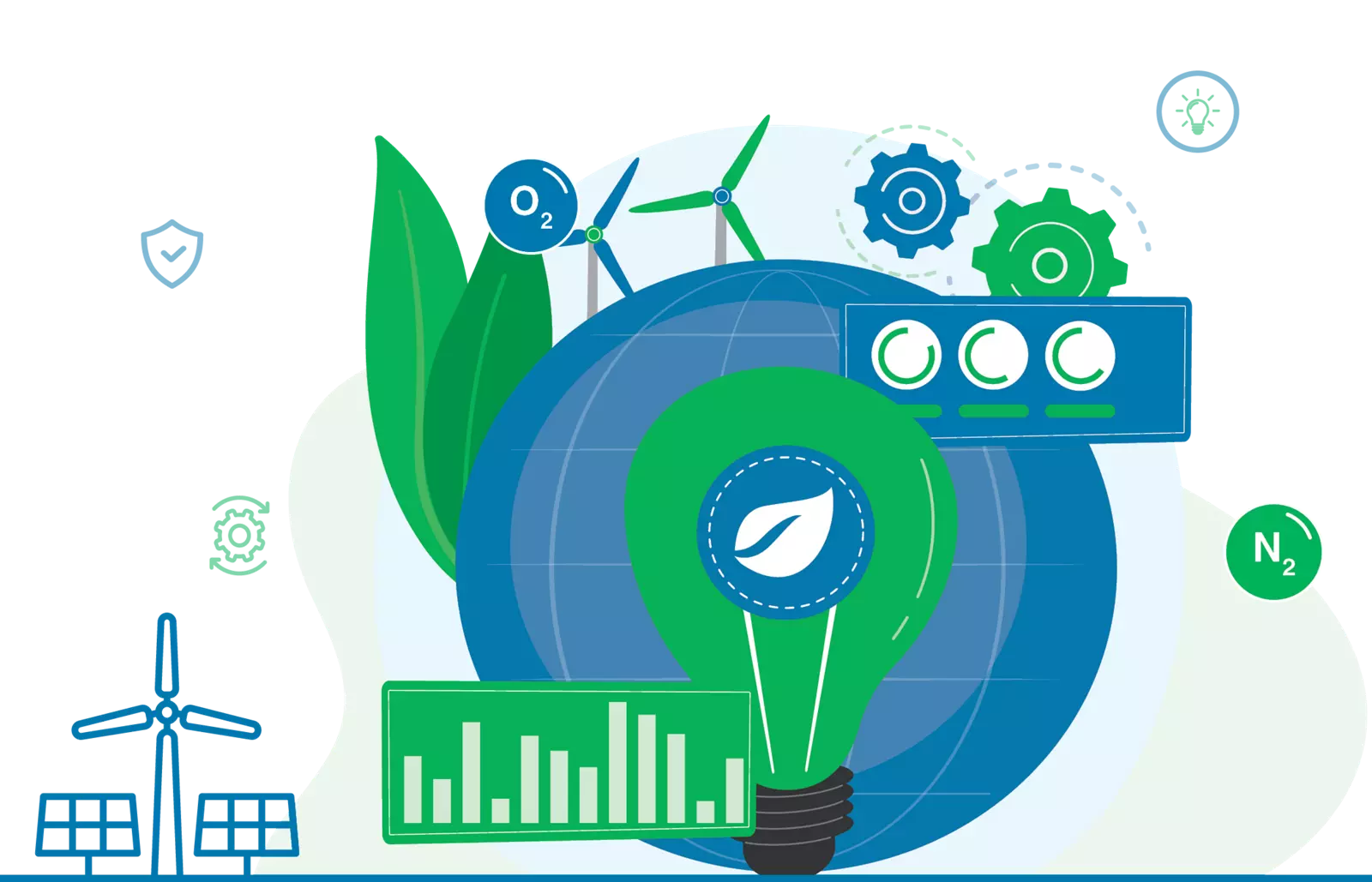 Compressing
air (and therefore also the generation of industrial gases) consumes a lot of energy. Fortunately, there are now lots of technologies that
can reduce that demand significantly.
Compressing
air (and therefore also the generation of industrial gases) consumes a lot of energy. Fortunately, there are now lots of technologies that
can reduce that demand significantly. With
the ICONS remote monitoring technology, you can always keep an eye on the performance of your system. This allows you to react to changing
conditions, such as a varying demand.
With
the ICONS remote monitoring technology, you can always keep an eye on the performance of your system. This allows you to react to changing
conditions, such as a varying demand..webp) Granted,
as opposed to the other tips, this will require a substantial initial investment. However, it will pay off quickly, especially at a time
of high energy prices. In addition, investments in green energy are often subsidized by governments with tax breaks or other incentives.
Granted,
as opposed to the other tips, this will require a substantial initial investment. However, it will pay off quickly, especially at a time
of high energy prices. In addition, investments in green energy are often subsidized by governments with tax breaks or other incentives.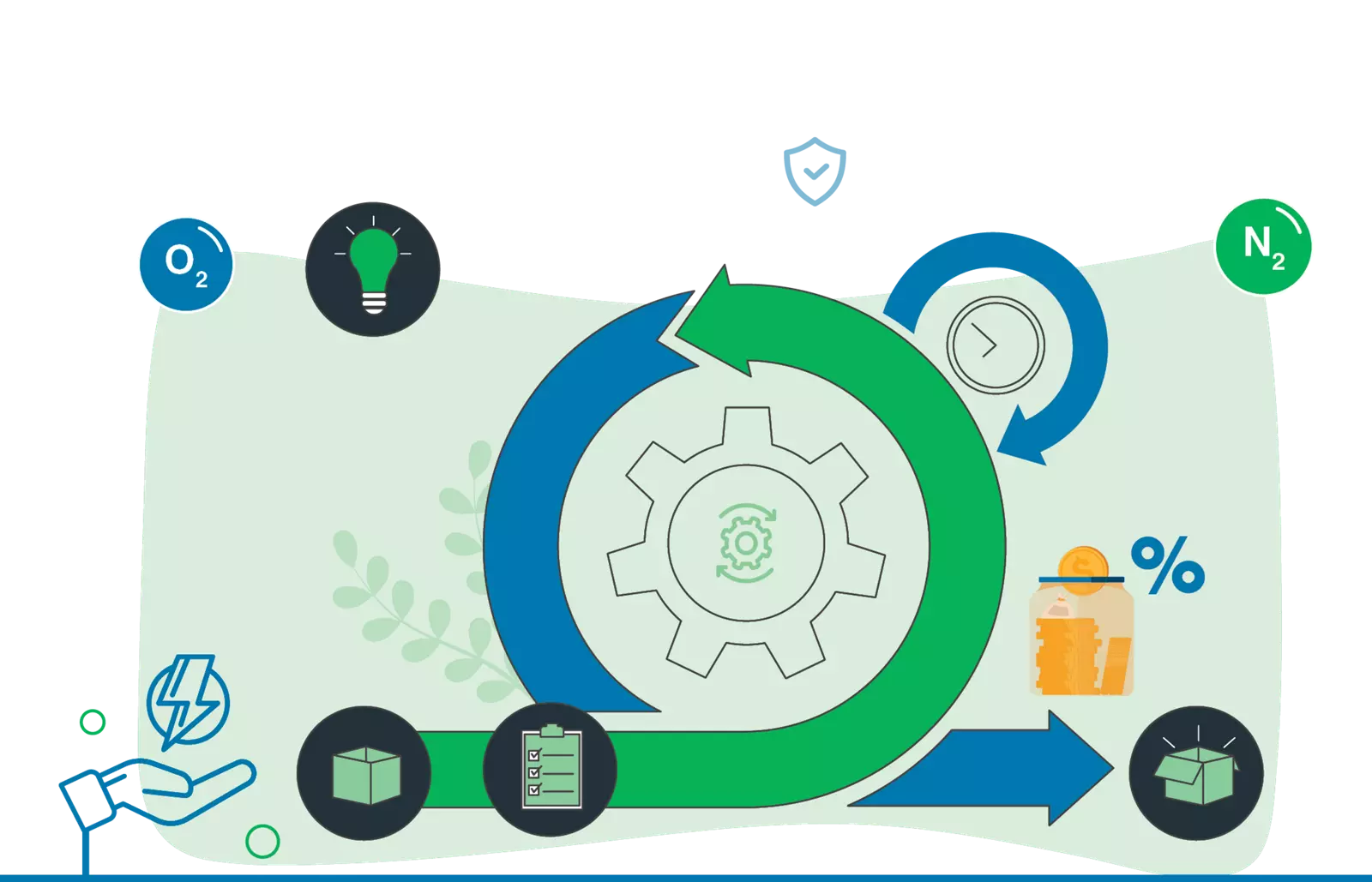 Did
you implement some or all of these recommendations but feel that your energy bill is still too high? Then you should consider replacing
your current gas generation system with newer, more energy efficient equipment.
Did
you implement some or all of these recommendations but feel that your energy bill is still too high? Then you should consider replacing
your current gas generation system with newer, more energy efficient equipment.