Screw Compressor Energy Saving TIps
What's the problem and how do I fix them?
Screw compressors are helpful for an enormous range of
applications such as air filling, packaging, tools, HVAC control, and more! One possible drawback is the amount of electricity they use; air
compressors can be a huge drain on energy if used inefficiently. If you are running them too long, allowing leaks to exist, or using the
wrong type of compressor, you are wasting energy and money. This article will go over some of the biggest power-wasters and how to
stop/prevent them!
6 Possible Problems and How to Fix Them
1. Operating Without a Schedule
 One
of the most common ways to waste energy with air compressors is to operate with no set schedule. Every business works at different hours
and has varying levels of air demand, but if you only need compressors for 4 hours out of an 8-hour work day, it only makes sense that you
would only want them running for 4 hours. Unfortunately, manually turning compressors on and off is not always possible due to time and
space restrictions. Luckily, Ash Air thought of that. We carry several state-of-the-art compressor models with control panels that
allow the user to set a schedule on the machine itself.
One
of the most common ways to waste energy with air compressors is to operate with no set schedule. Every business works at different hours
and has varying levels of air demand, but if you only need compressors for 4 hours out of an 8-hour work day, it only makes sense that you
would only want them running for 4 hours. Unfortunately, manually turning compressors on and off is not always possible due to time and
space restrictions. Luckily, Ash Air thought of that. We carry several state-of-the-art compressor models with control panels that
allow the user to set a schedule on the machine itself.
2. Leaving Leaks Unfixed
Another problem that is more common than you may think is air compressor leakage. Leaks are not always easy to see or hear and can
contribute to energy waste and ineffectiveness of compressors. Depending on usage, a ¼” air leak at 100psi could cost over $2500 in wasted
energy over the span of a year. It is recommended to have a leak detection professional check your compressor(s) periodically so you can be
sure you aren’t wasting any energy. Duct tape may work as a short term solution, but it doesn’t fix the problem permanently.
3. Using Single-Stage Compressors
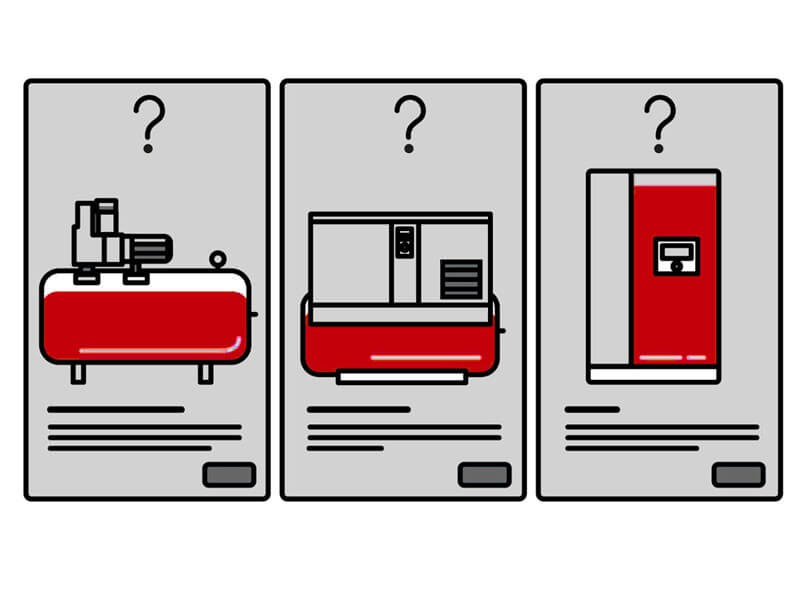
Single-stage air compressors are often used in HVAC applications despite their inefficient operation. They are either on or off, with no
variance in power, so if you only need a little air they will turn on full blast. When possible, variable-speed compressors should be used,
as they will attempt to match delivery with what is being demanded and not use as much power when less is required. CP carries
variable-speed rotary screw compressors that will save energy by operating when and how powerfully you need them to.
4. Clearing Debris
Though it is a very helpful tool, compressed air cannot do everything. You could be wasting money and breaking OSHA regulations without even
knowing it. One of the most common misuses of compressed air is debris clearing. Unless psi is 30 or less, clearing things from the ground
with compressed air is an OSHA violation. In addition, dusting debris off yourself or another person is forbidden regardless of pressure.
There are other, less expensive/dangerous ways to clean, so perhaps save the compressed air for more vital applications.
5. System Inefficiencies
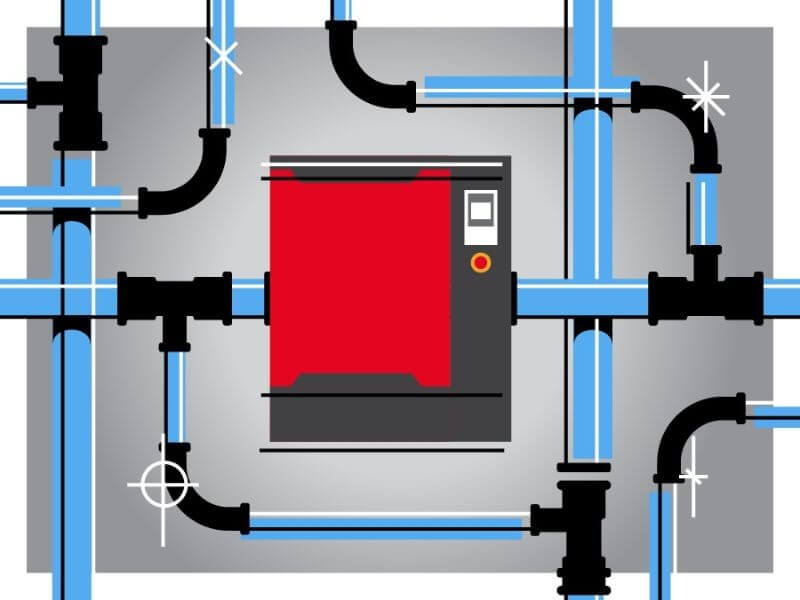
Another place air could be wasted is in the piping of air from the compressor to its destination. Often, processes and machinery are changed
or moved without considering what inefficiencies that could create, especially if you are operating multiple compressors from a centralized
location. Periodically review your piping system to make sure air is getting from the compressor to its final destination in as short a
distance as possible. The further air travels, the more energy it takes, so shortening the pipeline is a great way to save energy!
6. Old Filters
One of the most helpful tips for saving energy is to change filters according to a recommended maintenance schedule. Most compressors say
how often you should be replacing filters, and those schedules, based on testing and rigorous calculations, should be paid attention to! If
you use filters in other parts of your facility, those should also be systematically replaced according to a schedule.
Blocked filters, whether they are for air, oil, water, or any other fluid, prevent a portion of fluid from passing through. It is
extremely inefficient to operate with blocked filters, which is why replacing them is a great way to save energy. All of the other general
maintenance items of an air compressor should be checked regularly as well. Doing so will improve performance and extend the lifespan of
an air compressor.
Now time to get the energy savings going!
By implementing just a few of these energy saving tips, you could save thousands of dollars each year! Many operators miss many of these
energy saving opportunities because they are trying to save money in the moment, but they all cost more in the long run. Fixing a leaky
valve is not as expensive as all the energy it wastes. If you remember two things from this blog post, they should be to keep up with
regular compressor maintenance and to only turn on your air compressor when it’s needed.
' transform%3D'scale(7.5)'%3E%3Cpath fill%3D'%231b3a58' fill-opacity%3D'.5' d%3D'M10 78h232v28H10z' %2F%3E%3Cg transform%3D'translate(146 29) rotate(0) scale(241.1 41.4)'%3E%3Cellipse fill%3D'%23fffffd' fill-opacity%3D'.8' cx%3D'0' cy%3D'0' rx%3D'1' ry%3D'1' %2F%3E%3C%2Fg%3E%3Cg transform%3D'translate(227 83) rotate(185) scale(23 27)'%3E%3Cpath fill%3D'%23500c00' fill-opacity%3D'.7' d%3D'M-.5-.5h1v1h-1z' %2F%3E%3C%2Fg%3E%3Cellipse fill%3D'%232f2f2f' fill-opacity%3D'.5' cx%3D'128' cy%3D'47' rx%3D'73' ry%3D'3' %2F%3E%3Cpath fill%3D'%23343434' fill-opacity%3D'.5' d%3D'M22 33h103v5H22z' %2F%3E%3Cpath fill%3D'%23fef6ee' fill-opacity%3D'.7' d%3D'M186 96h59v10H186z' %2F%3E%3Cg transform%3D'translate(30 93) rotate(29) scale(23.5 14.1)'%3E%3Cellipse fill%3D'%23023d80' fill-opacity%3D'.7' cx%3D'0' cy%3D'0' rx%3D'1' ry%3D'1' %2F%3E%3C%2Fg%3E%3Cg transform%3D'translate(131 86) rotate(275) scale(32 15)'%3E%3Cpath fill%3D'%2300417b' fill-opacity%3D'.6' d%3D'M-.5-.5h1v1h-1z' %2F%3E%3C%2Fg%3E%3C%2Fg%3E%3C%2Fsvg%3E)

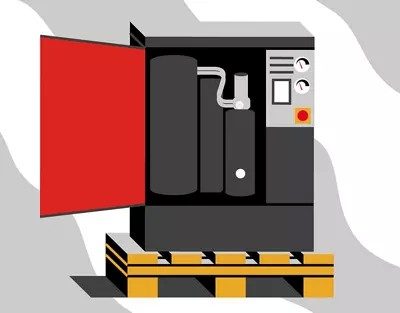 One
of the most common ways to waste energy with air compressors is to operate with no set schedule. Every business works at different hours
and has varying levels of air demand, but if you only need compressors for 4 hours out of an 8-hour work day, it only makes sense that you
would only want them running for 4 hours. Unfortunately, manually turning compressors on and off is not always possible due to time and
space restrictions. Luckily, Ash Air thought of that. We carry several state-of-the-art compressor models with control panels that
allow the user to set a schedule on the machine itself.
One
of the most common ways to waste energy with air compressors is to operate with no set schedule. Every business works at different hours
and has varying levels of air demand, but if you only need compressors for 4 hours out of an 8-hour work day, it only makes sense that you
would only want them running for 4 hours. Unfortunately, manually turning compressors on and off is not always possible due to time and
space restrictions. Luckily, Ash Air thought of that. We carry several state-of-the-art compressor models with control panels that
allow the user to set a schedule on the machine itself.