An oil analysis can prevent problems later down the road. It's often been referred to as the blood test for your compressor. Just like a
blood test can tell you about your health and early alerts to impending problems, an analysis can do the same for your compressor.
What does an oil analysis tell you?
An
oil analysis is a quick, non-harmful way to check the health of your air compressor by looking at what is in the lubricant. Since your oil
is used for lubrication and cooling, it's a perfect sample to evaluate. By analyzing a sample of used machine oil, you can determine the
amount of contamination, the wear rates and overall condition of your machine. The real benefit of an oil analysis is that it acts as an
early warning system, alerting you to potential problems before the air compressor goes down or has failure. When Chicago Pneumatic runs
an oil analysis on your machine, we are looking for wear metals, contaminants and additives that are present in your lubricant. Below are
examples of those types of elements.
An oil analysis report will show a list of all the metals, contaminants and additives mentioned above with an overall number beside each. A
lab will generate a report that will scale the level of risks of normal, monitor, abnormal and even critical. Note, one of the most critical
roles of a compressor lubricant offers is to provide heat removal in the air end. As the air is compressed, it generates a lot of heat. If
this heat is not removed rapidly, the bearings, seals and gears will all fail rapidly. Poor heat removal can be traced to contaminated
lubricant or the incorrect lubricant type being used.
Helpful Tips for your Air Compressor
1. Monitor
contamination around the air compressor: Is
your air compressor being stored in a room that you are also doing granite grinding? You wear a mask to protect yourself from breathing in
those contaminants, the air compressor needs to be protected from those elements also.
2. Lubricants: Are you using the right oil? Make sure you are feeding the correct oil into your machine. All user
manuals include the type of oil, usually their own OEM manufacturer lubricants, to be used for that machine.
3. Chicago Pneumatic 5-Year Warranty for Rotary Screws: To maintain warranty coverage, Original parts and
lubricants must be used in the compressor, oil sampling must be conducted every 2000 hours, and recommendations based on the results of the
oil sample analysis must be followed.
Do you have an idea for our #expertcorner? Let
us know!
Who we are and how Ash Air can help your business!
Ash Air has been around in New Zealand since 1979, and we’ve grown into a nationwide company with international support and a
reputation for quality and reliability.We look after all things compressed air for your business!
Reciprocating, Screw, air compressors
Vacuum pumps
Nitrogen
An extensive line of air treatment components
Ash Air's range of Chicago Pneumatic, Alup, Pneumatech, and Quincy compressors are used extensively around the world in industries
ranging from oil and gas to food, automotive and farming, and we bring you these world class compressors here in the land of the long white
cloud.Our technicians are compressed air equipment experts and are dedicated to addressing customer needs. Supported by a 13 locations
nationwide, Ash Air offers one of the widest selections of compressed air equipment and parts available today in New Zealand.
Reliability and Efficiency
With Ash Air compressors, you can count on reliability and high performance for even the most demanding applications. We focus our
efforts on the following:
There are crucial reasons why you should service and maintain your compressor regularly, with the most common issues being piston failure
caused by wear of components, increased friction, corrosion, reduced cooling, overheating bearings and components, clogging of air filters.
Read More…
Our passion for energy efficiency and cost saving derives from the concern for our children’s future. Analysing the efficiency of your
system is a brilliant way to start saving.
Read More…
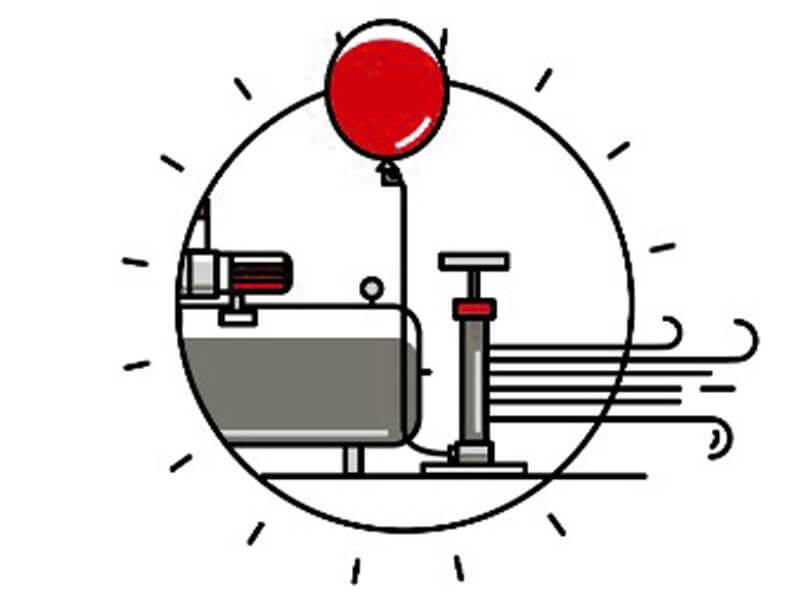
Compressed air is all around us, from the air in a balloon to pumping up tires on your bicycle. In this article we will explain what
compressed air is and how it is created. Whether you know it or not, compressed air is involved in every aspect of our lives, from the
balloons at your birthday party to the air in the tires of our cars and bicycles. It was probably even used when making the phone, tablet or
computer you’re viewing this on.
Read More…
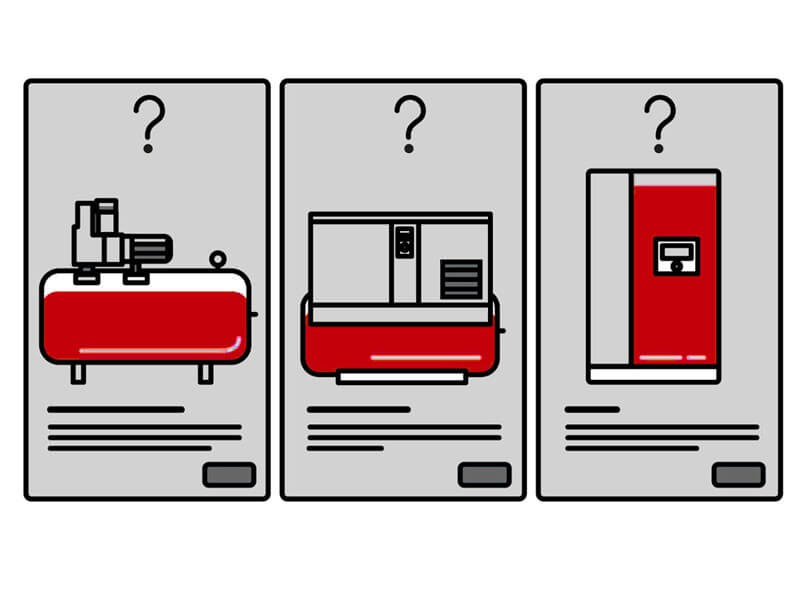
One of the biggest challenges is to correctly size your new air compressor. Similarly to everything else, new compressors available on the
market are more efficient and employ better technology, therefore you have to understand the application and usage to size the machine
correctly. Choosing the wrong air compressor for your facility can lead to problems with production and or increased costs due to wasted
energy.
Read More…
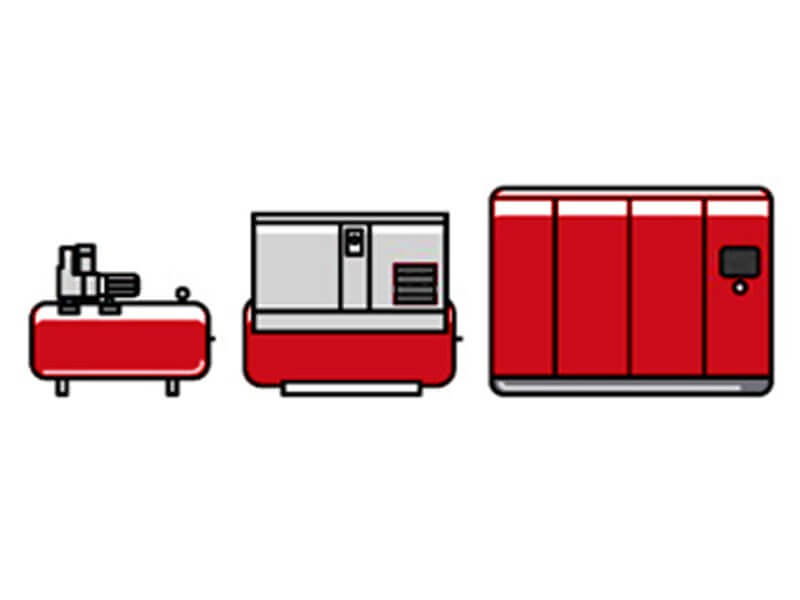
Once you have the size of the air compressor figured out, the
next thing to do is to decide on the type of compresor you will need for your application - piston, rotary screw compressor etc. Let us take
a look at two of the most popular options available. When choosing the right type of compressor, you should ask yourself the following
questions:
Read More…
Which vacuum pump do I need? - this is one of the most frequent questions we receive and this is understandable, because there are number
of technologies which can provide the same vacuum level and pumping speed. Here is quick advice on how to choose the best vacuum pump for
your needs.
Read More…
You may be asking, why does my air compressor start, then stop? Allow us to take the guessing out of it. We understand your pain. We know
that a compressor problem can quickly result in hours (if not days) of production downtime and loss of revenue. When your compressor
continuously shuts off from on, we refer that as a short cycle. There are a few reasons that a short cycle may be happening with your
compressor.
Read More…
Air compressor leaks are very common in all applications, but can be very costly and difficult to find. On average, 20-30% of the compressed
air used in a manufacturing plant is wasted as leaked air. Finding and fixing these leaks can save your business thousands of wasted dollars
a year.
Read More…
When installing a compressed air system into a business, people often look to PVC piping as an option to build a piping system because it is
cheap, versatile and easy to install. However, using PVC pipe in any compressed air application is extremely dangerous and NOT recommended
by multiple associations and manufacturers.
Read More…
Changing the oil and oil filters on your compressor is one of the most common routine maintenance tasks to perform to keep your compressor
running efficiently. After you remove your old oil and oil filter, you may find yourself wondering, “Where do I dispose of these?”, or “Can I
just throw them in the trash?”. Because oil is toxic and a pollutant, disposing of your old oil and filters is not as simple as just tossing
them in the trash.
Read More…
 An
oil analysis is a quick, non-harmful way to check the health of your air compressor by looking at what is in the lubricant. Since your oil
is used for lubrication and cooling, it's a perfect sample to evaluate. By analyzing a sample of used machine oil, you can determine the
amount of contamination, the wear rates and overall condition of your machine. The real benefit of an oil analysis is that it acts as an
early warning system, alerting you to potential problems before the air compressor goes down or has failure. When Chicago Pneumatic runs
an oil analysis on your machine, we are looking for wear metals, contaminants and additives that are present in your lubricant. Below are
examples of those types of elements.
An
oil analysis is a quick, non-harmful way to check the health of your air compressor by looking at what is in the lubricant. Since your oil
is used for lubrication and cooling, it's a perfect sample to evaluate. By analyzing a sample of used machine oil, you can determine the
amount of contamination, the wear rates and overall condition of your machine. The real benefit of an oil analysis is that it acts as an
early warning system, alerting you to potential problems before the air compressor goes down or has failure. When Chicago Pneumatic runs
an oil analysis on your machine, we are looking for wear metals, contaminants and additives that are present in your lubricant. Below are
examples of those types of elements.

 1. Monitor
contamination around the air compressor: Is
your air compressor being stored in a room that you are also doing granite grinding? You wear a mask to protect yourself from breathing in
those contaminants, the air compressor needs to be protected from those elements also.
1. Monitor
contamination around the air compressor: Is
your air compressor being stored in a room that you are also doing granite grinding? You wear a mask to protect yourself from breathing in
those contaminants, the air compressor needs to be protected from those elements also.